
GLDMA is a professional company in the production and Research&Development of metal bending machine, cutting machines, Hydraulic press machine, mechanical press machine, rolling machine, ETC. Relying on the integrity management, strong credit, and strict quality control, our company has grown and developed into a famous and powerful company in very short time. Company product range covers more than 20 series, over 200 types of small, medium, and big sizes of press brake, CNC shearing machine, CNC hydro-servo bending machine, mechanical press machine, Ironworker machine, hydraulic press machine, rolling machine including models of QC11Y, QC12Y, WC67Y, WC67K, W11, W11S, W12, J21, J23, Q35Y, etc. All those machines are widely used in manufacturing automobile, telecom tower, light pole, utensils, computer, ETC. Company development strategy in the field of metal sheet processing industry, always following the market trend to meet the demand of clients, Always pay attention on the long term cooperation with client, Always keep the advantages of core competition in technology, service and management, Always respect our contract and keep our promise. To all clients: Your strict requirements of quality is the driving force of our effort. May our products and service bring you the joys of success. If you need a reliable press brake machine manufacturer, then you are at the right place, next I will introduce the powerful press brake machine manufacturer in China, GLDMA Group.
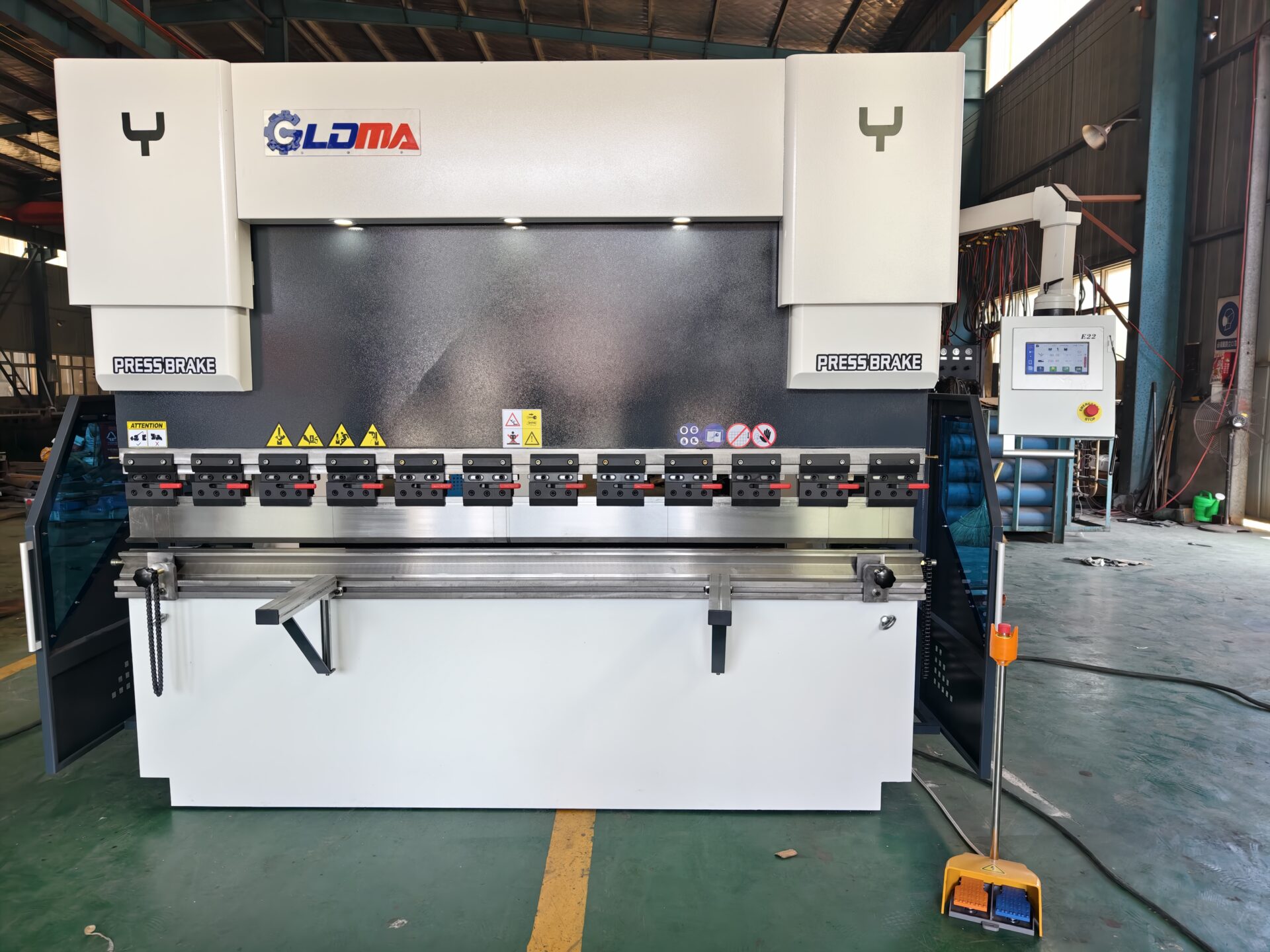
Hydraulic press brakes have long been the workhorses of metal fabrication, while newer electric press brakes are gaining attention for their efficiency and precision. This outline compares hydraulic vs. electric press brakes from a procurement perspective, examining performance, costs, user experience, and long-term ROI. The goal is to help manufacturing procurement professionals weigh the pros and cons of each technology and make an informed investment decision.
- Hydraulic Press Brakes: Use hydraulic fluid and cylinders to exert force on the metal. They are known for high tonnage capabilities and have decades of proven use in industry.
- Electric (Servo-Electric) Press Brakes: Rely on electric servo motors (and often ball screws or belt drives) to generate bending force instead of hydraulic fluid. They offer a clean operation with no hydraulic oil and precise control through advanced motors.
- Key Difference: Hydraulic machines run a motor and pump continuously to keep pressure, while electric machines only draw power during the bending cycle. This fundamental difference affects their performance, energy use, and maintenance needs.
Performance and Speed Comparison
- Cycle Times: Electric press brakes generally deliver faster cycle times for bending, as the ram can accelerate quickly and decelerate precisely under servo control. This can boost throughput for high-mix or short-run jobs.
- Approach & Bending Speeds: Hydraulic presses often have amazingly fast approach speeds (ram moving into position) but slower bending and return speeds due to fluid flow limits. Electric models may have slightly slower approach, but their consistent high bending speed means quicker overall part processing in many cases.
- High-Volume Production: For continuous operation and heavy forming, hydraulic presses provide steady power. They excel in long runs where their slightly slower cycle is offset by managing thicker materials without strain. Electric presses shine in operations requiring frequent starts/stops or quick job changeovers, thanks to rapid ramp-up and no need for hydraulic pressure buildup.
Precision and Bending Accuracy
- Bending Accuracy: Electric press brakes offer outstanding precision and repeatability. They can achieve positioning accuracy of about 0.000079 inches (about 1 micron) in some models, which is far tighter than typical hydraulic press brakes (around 0.0004 inches or ~10 microns).
- Consistency: Electric systems produce very consistent bending results throughout the day. Hydraulic press brake accuracy can drift as oil temperature and viscosity change over a shift, sometimes causing slight angle variations. This means hydraulic machines may require test bends or adjustments if conditions change, while electrics are less sensitive.
- Repeatability: Both types with CNC controls can repeat programmed bends reliably, but the closed-loop control of servo motors in electric presses often yields better repeatability for ultra-precise work. For most general fabrication tasks, high-quality hydraulic CNC brakes still provide ample accuracy, but precision-focused operations (e.g., electronics enclosures, aerospace parts) often favor electric technology for its micron-level control.
Tonnage Capacity and Size Range
- Force and Size Availability: Hydraulic press brakes come in a wide range of sizes and tonnages. They can be built for extremely high tonnage applications – machines in the hundreds or even thousands of tons are available for heavy plate bending. Electric press brakes, in contrast, are generally limited to lower tonnage ranges (often up to ~80 tons for many standard models, with a few specialized electric presses up to ~300 tons maximum).
- Large Format Bending: For long bend lengths (large bed sizes) and very thick materials, hydraulic presses are usually the only choice because all-electric designs have practical limitations in power transmission for extreme loads. Heavy fabrication industries (e.g., shipbuilding, construction equipment) rely on high-tonnage hydraulic press brakes for this reason.
- Small to Mid-Range Work: In the low-to-medium tonnage range (e.g., ≤100 tons), electric press brakes are more common. They are ideal for smaller parts and thinner materials. If a shop specializes in small precision parts, an electric press brake can manage the workload efficiently, while a hydraulic machine might be oversized for the task.
- Hybrid Options: It’s worth noting there are also hybrid press brakes (electro-hydraulic systems) that use electric servo motors to drive hydraulics. These can achieve energy savings while still delivering higher tonnages, offering a middle ground for those needing more force than pure electric can provide.
Energy Efficiency and Power Consumption
- Continuous vs. On-Demand Power: Hydraulic press brakes run a hydraulic pump and motor continuously, consuming energy even when idle, to keep pressure available. Electric press brakes use power on-demand – the servo motor only runs when making a bend, and shuts off during idle time, leading to significantly lower energy usage during non-active periods.
- Energy Savings: In practice, modern electric or hybrid press brakes can be 20–30% more energy-efficient than traditional hydraulics under typical operation. Some fully electric models report even greater savings. For example, GLDMA’s all-electric EPP series claims up to 50% lower energy consumption compared to equivalent hydraulic brakes, which can translate to major cost reductions over time.
- Heat and Power Load: Hydraulic systems convert a lot of electrical energy into heat (in the oil and pump), wasting energy especially if the machine sits idle. Electric systems have high-efficiency motors (often >90% efficiency) and minimal energy loss. This not only cuts electricity costs but can also reduce heat output in the shop, indirectly lowering cooling costs or discomfort.
- Peak Power Consideration: One warning – to achieve the same peak tonnage, electric presses may draw a high momentary current, while hydraulic presses use stored hydraulic pressure. However, many electric press brakes manage energy smartly (regenerative drives, capacitor banks, etc.), so overall demand on facility power is usually lower or more evened out than running big hydraulic pumps continuously.
Environmental and Workplace Impact
- Noise Levels: Hydraulic press brakes are typically louder in operation. The hydraulic pump motor runs continuously, emitting noise throughout the day, and the act of moving oil under high pressure can produce a constant hum or whine. In contrast, electric press brakes are incredibly quiet when idle (no motor running) and only emit sound from the servo motors or ball screws during bending, which is generally much quieter than hydraulics. The quieter operation of electric machines can improve the work environment on the shop floor.
- Cleanliness and Leaks: Electric press brakes have a clear advantage in cleanliness – they use no hydraulic oil, so there’s zero risk of oil leaks or spills. Hydraulic press brakes, on the other hand, come with the inherent risk of oil leakage. Over years of use, seals and hoses can wear out, and if a line leaks or a part fails, you may have oil on the floor and a clean-up on your hands. From an environmental standpoint, avoiding hydraulic oil means no waste oil to dispose of and no potential contamination issues.
- Energy and Carbon Footprint: Using less power not only saves money but is also greener. Electric machines that consume less energy (especially during idle times) contribute to a lower carbon footprint for the facility. Additionally, cutting hydraulic oil (which is a petroleum product) is beneficial for sustainability goals – there’s reduced need for oil changes and disposal. Companies focused on environmental compliance or ISO 14000 considerations may lean toward electric presses for their inherently cleaner operation.
- Heat and Ventilation: Hydraulic systems can generate ambient heat from the constantly running motor and warm oil, which may need good ventilation or cooling in the shop. Electric press brakes run cooler by comparison, as energy is not continuously wasted as heat. This can make the immediate work area more comfortable and reduce strain on air conditioning systems.
Adange
- High dynamic for higher productivity of the machine.
- Compliance with EU Directives.
- Lower energy for a green Machine.
- Energy efficiency of up to 35 % compared to conventional systems.
- Operating cost is min due to low energy consumption. Thus, it gives advantages to the user with high efficiency & low operation cost.
The machine working video: https://www.youtube.com/watch?v=MGME4yGaNrI